Listening, learning, and always acting’ - Critical insight upon Awaab’s Law from Rochdale Borough Housing
With Awaab’s Law having come into force on 27 October 2025, the UK social housing sector has embarked on its most significant transformation in over a decade. But what will this actually look like in practice?


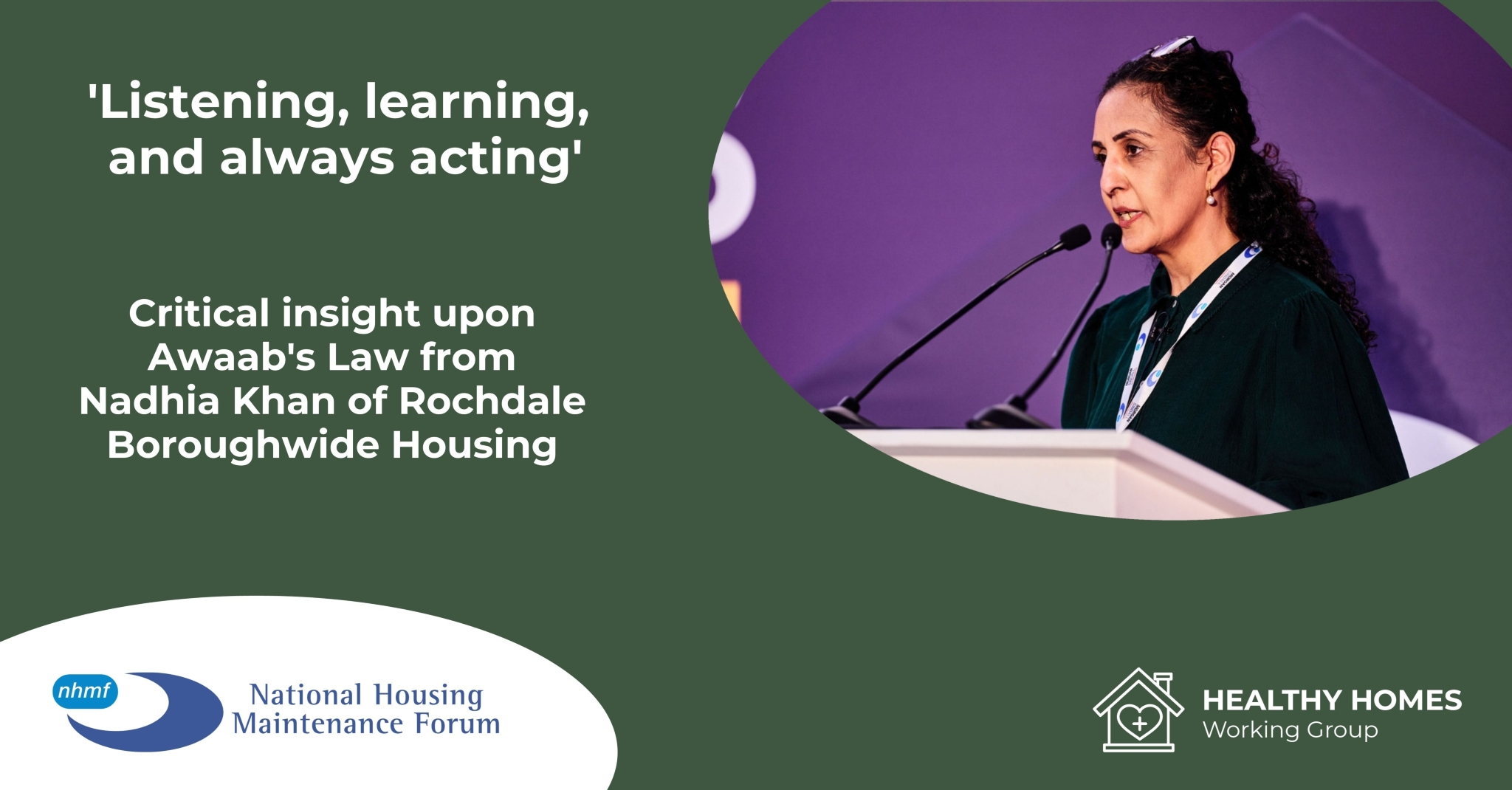
For Rochdale Boroughwide Housing (RBH) it is not simply a set of rules but a legacy. It carries the name of a little boy whose life was lost to damp and mould, and it stands for something important - that people living in social housing and wider can rely on legislation in Awaab Ishak’s name to keep them safe and free from harm in their homes.
Compliance cannot be reduced to tick‑boxes or seen as an added burden. At its heart, the law is about dignity, respect, and the simple assurance of safe, warm homes.
The tragic loss of Awaab has already reshaped how we work here at RBH, and we fully expect the first few months after the implementation of Awaab’s Law to be even more demanding. Rightly so.
Our preparation has been fundamental to how we do things now. We were one of the first organisations to really dig into the issue of damp and mould, and it was a core part of our recovery plan.
Doing this alongside getting behind front doors to understand the quality of our homes has seen us prioritise stock condition surveys. Where we’ve identified hazards across the full HHSRS spectrum, we’ve dealt with it there and then – there was never a time we would simply create a list of things to resolve down the track, so in many ways we are ready for the focus on damp and mould; but we are equally ready for the rollout of the focus on the wider hazards in the coming year.
Obviously, addressing issues with damp and mould was an early priority and right at the start of our recovery we established a dedicated Damp and Mould Team, now 28 people strong.
We started in the reactive space of treating but quickly shifted into addressing root cause issues that had come about because of a significant lack of investment in our homes. We have since invested heavily in roofs, guttering and pointing. We’ve got underneath our data further and identified property archetypes which are more prone to damp and mould. In these homes we have installed positive ventilation systems to help with preventing the problem reoccurring.
We are most definitely on the front foot. Damp and mould recurrence in our homes is down from 48% in summer 2023 to around 13% now – a statistic which tells us our focus on dealing with root cause is working. We’ve also overhauled our Property Services with a project that provides a new, consistent, end-to-end diagnosis and prioritisation system for repairs. This not only ensures that our customers see the right operative at the right time, it will also help ensure we always meet the necessary deadlines set out in Awaab’s Law and support our ambition to achieve upper-quartile customer satisfaction. For us, preparation meant we were ready to turn new policy into operational practice.
Meeting the new 24‑hour requirement for emergency hazards will stretch resources for us and for all housing providers, but it is the right standard. Families deserve immediate safety. Our experience in clearing thousands of repairs and removing our backlog shows what can be achieved when you commit fully, even if it means strengthening weekend and out‑of‑hours services and making tricky decisions to be able to absorb the costs.
But as well as making changes to policy and procedure, a big part of our journey has been cultural. We had to take a very honest look at the culture of our organisation and meet those challenges head-on; to ensure that never again would families face attitudes that blamed “lifestyle”, or be met with assumptions, prejudice and misunderstanding. We also learned that you cannot truly understand a home from a phone call. Face‑to‑face visits have brought us closer to our customers and allowed us to see what was really happening – and we have committed to ensuring every one of our customers receives a tenancy audit visit from us at least once every three years.
The Ombudsman and the Regulator now have sharper tools, and rightly so. RBH experienced this first‑hand, moving from downgrade to our return to compliance. Enforcement is not something to fear if your purpose is clear: it is a safeguard for tenants, and a reminder that the law exists to protect them.
RBH feels like a very different business to how it was two years ago. It’s an organisation that has been through a lot but is coming out the other side stronger and more determined to be the best landlord we can. This will see a continued focus on our core business: being a great landlord, investing in our homes and preparing for a future that will see us working with partners to regenerate the places in which we work and developing new homes.
So for us, Awaab’s Law is not just the start of new rules. It is about listening, learning, and always acting so that every home is safe. As a sector we will face challenge, but if we hold fast to the principle that every customer deserves dignity and respect in their homes, compliance will follow. We owe it to Awaab’s memory to ensure that is always the case.